Mira Hormone Tracker Review
DETAILS
When — 2026
What — Hormone Tracker
Brand — Mira
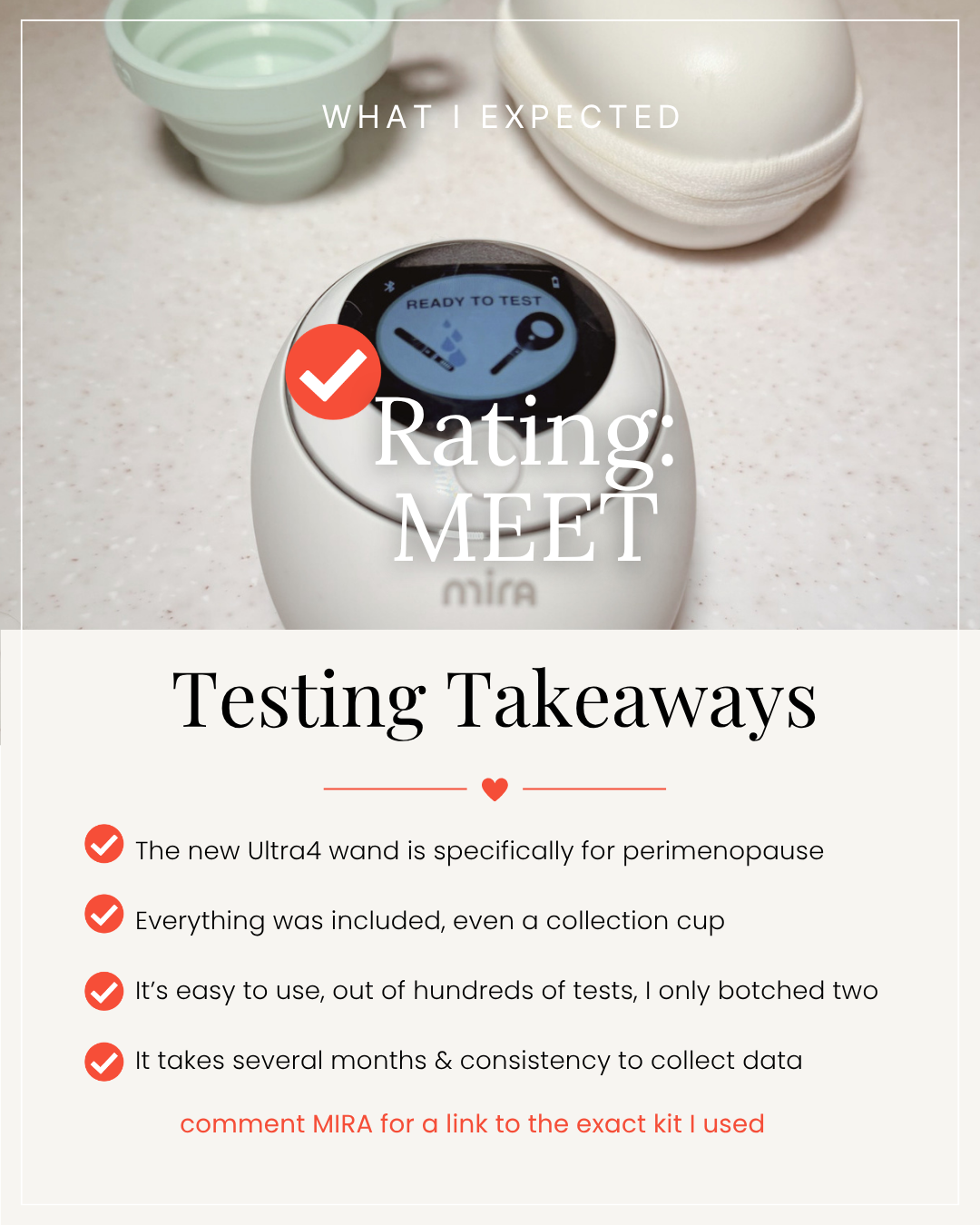
Rating — MEET
Mira Hormone Monitor for Perimenopause: Is It Worth It?
Perimenopause would be a lot easier if our hormones had the decency to misbehave on the exact day we had bloodwork.
Mine did not.
I’ve been dealing with hormone issues since I was 37. For years, I had a pretty good hormone health routine that worked for me.
Then I got closer to menopause.
Suddenly, what had been relatively predictable became anything but. I could feel completely different from one week to the next. Headaches. Poor sleep. Mood changes. Brain fog. The usual perimenopause party favors.
The frustrating part was trying to figure out whether any of it followed a pattern.
A blood test can be useful, but it tells you what your hormones were doing when your blood was drawn. And during perimenopause, hormone levels can fluctuate considerably. In fact, ACOG says most women don't need hormone testing to determine whether they're in perimenopause because symptoms, age, and menstrual changes are usually more useful for the diagnosis.
I wasn't looking for another way to diagnose perimenopause. I already knew I was in it.
I wanted a better way to understand why some days I felt crazier than others.
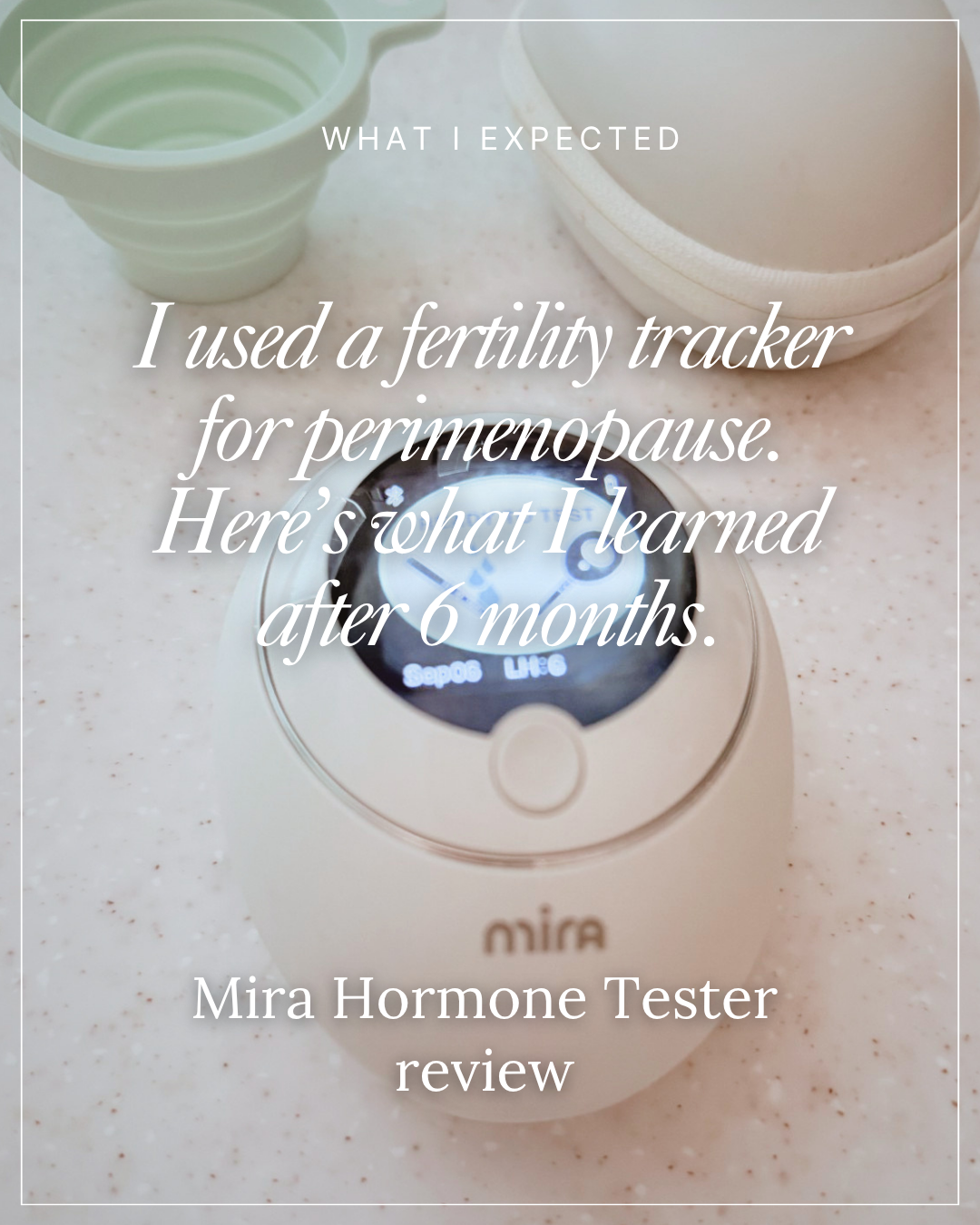
So I tried something I originally knew as a fertility tracker: the Mira Hormone Monitor.
What I Expected (the Promise)
Mira is an at-home urine hormone monitoring system. You collect a urine sample, dip a disposable testing wand, and insert the wand into the Mira Analyzer. The results sync with the Mira app, where you can see your hormone readings over time.
Mira recommends using first-morning urine when possible for more consistent testing.
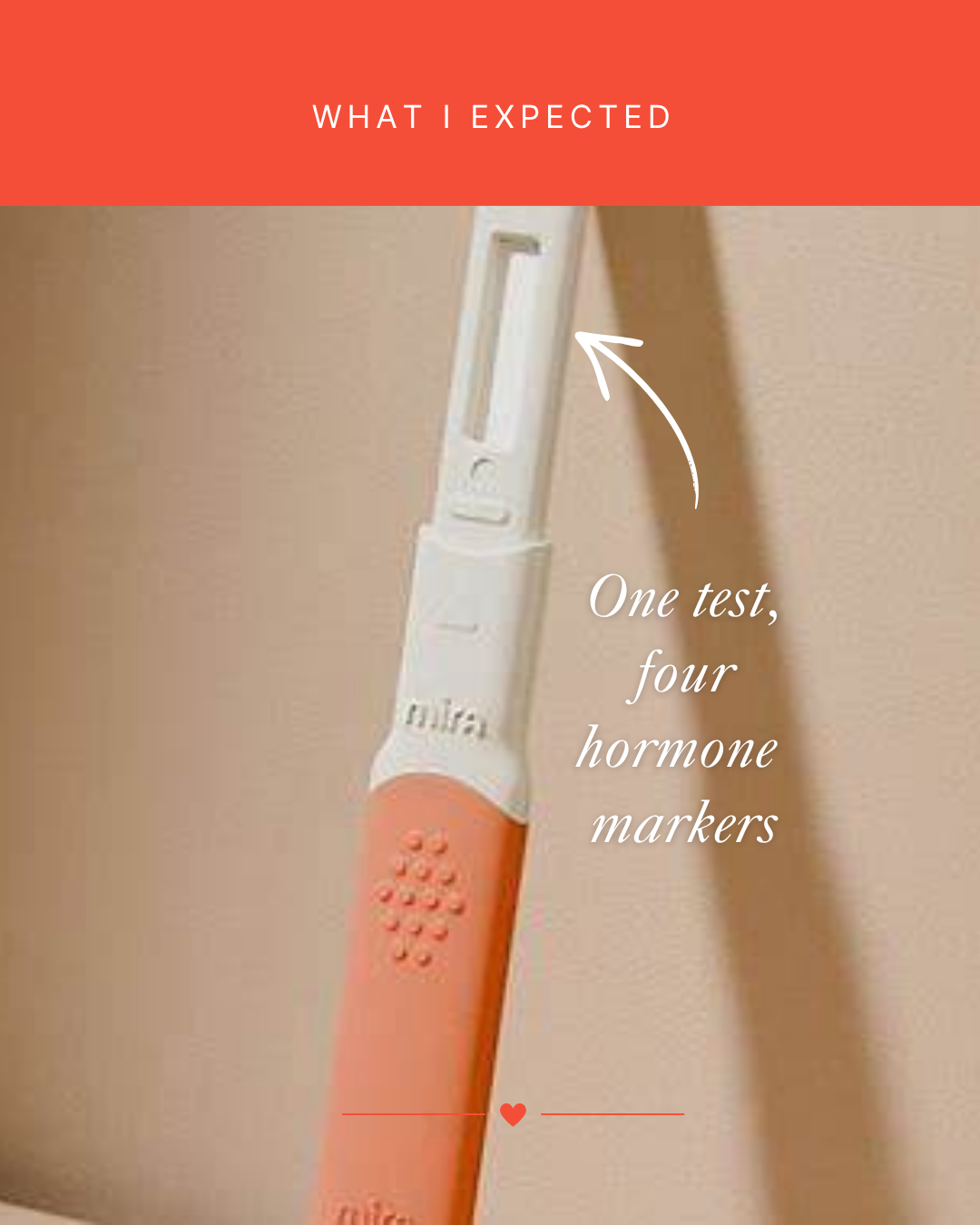
The new Ultra4 wand measures four hormone markers in one test:
FSH: follicle-stimulating hormone
LH: luteinizing hormone
E3G: a urinary estrogen metabolite
PdG: a urinary progesterone metabolite
That is a significant improvement over the Mira system I started with, because I previously had to buy two different types of wands to get the information I wanted.
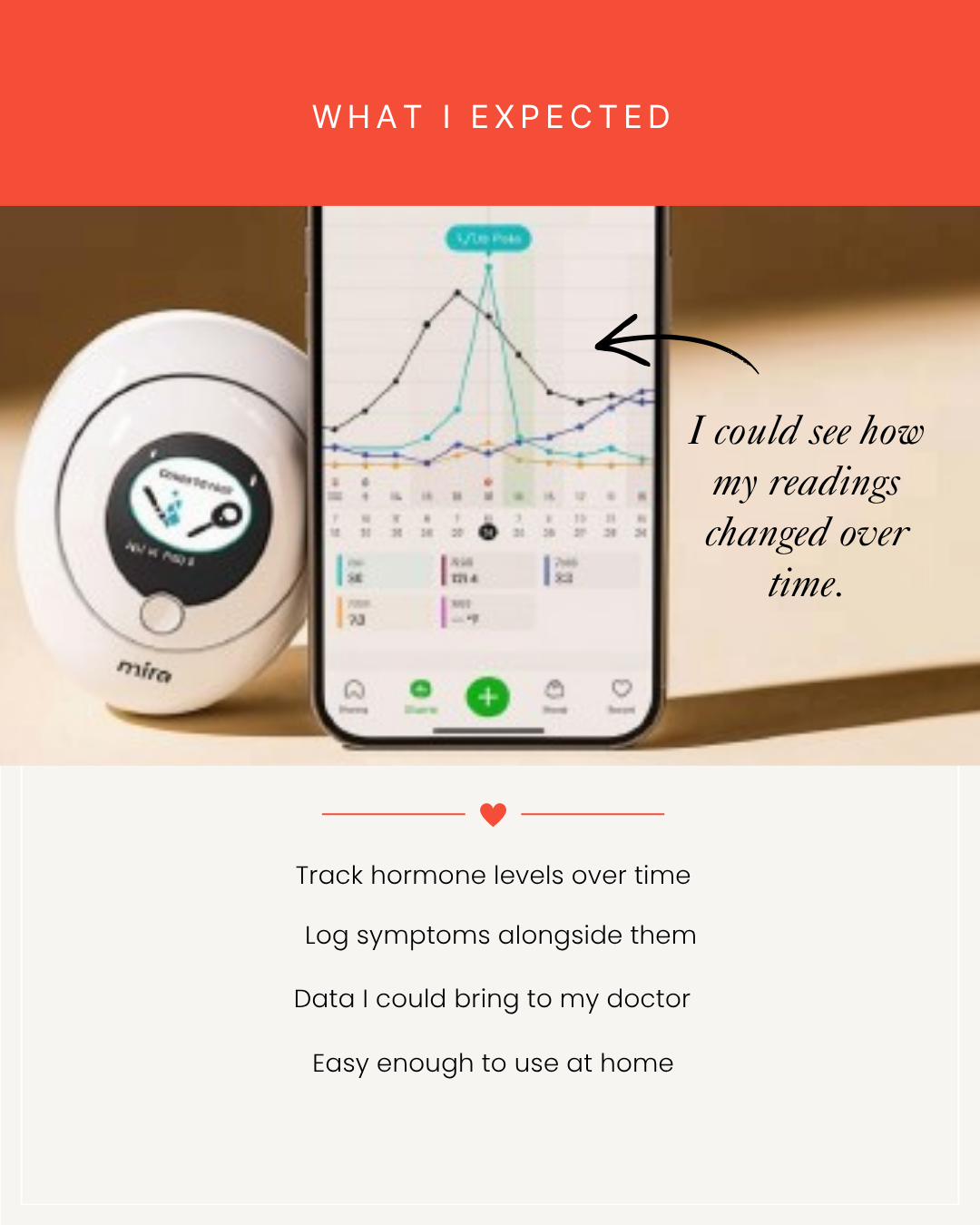
Mira also allows you to record symptoms in the app. And that was the part that interested me for perimenopause.
Successfully navigating WebMD doesn’t, in fact, make me a doctor, so please don’t take this as medical advice. I didn't expect Mira to diagnose me or replace an actual doctor.
What I did expect:
a fairly easy way to track hormone changes over time
the ability to log symptoms alongside those numbers
enough data to see patterns, not one isolated result
information my doctor could trust
What Happened (real life)
I started testing and recording my symptoms. Headache. Poor sleep. Mood changes. Brain fog. Feeling completely unlike myself for no apparent reason. If you know, you know these are just a few of the symptoms.
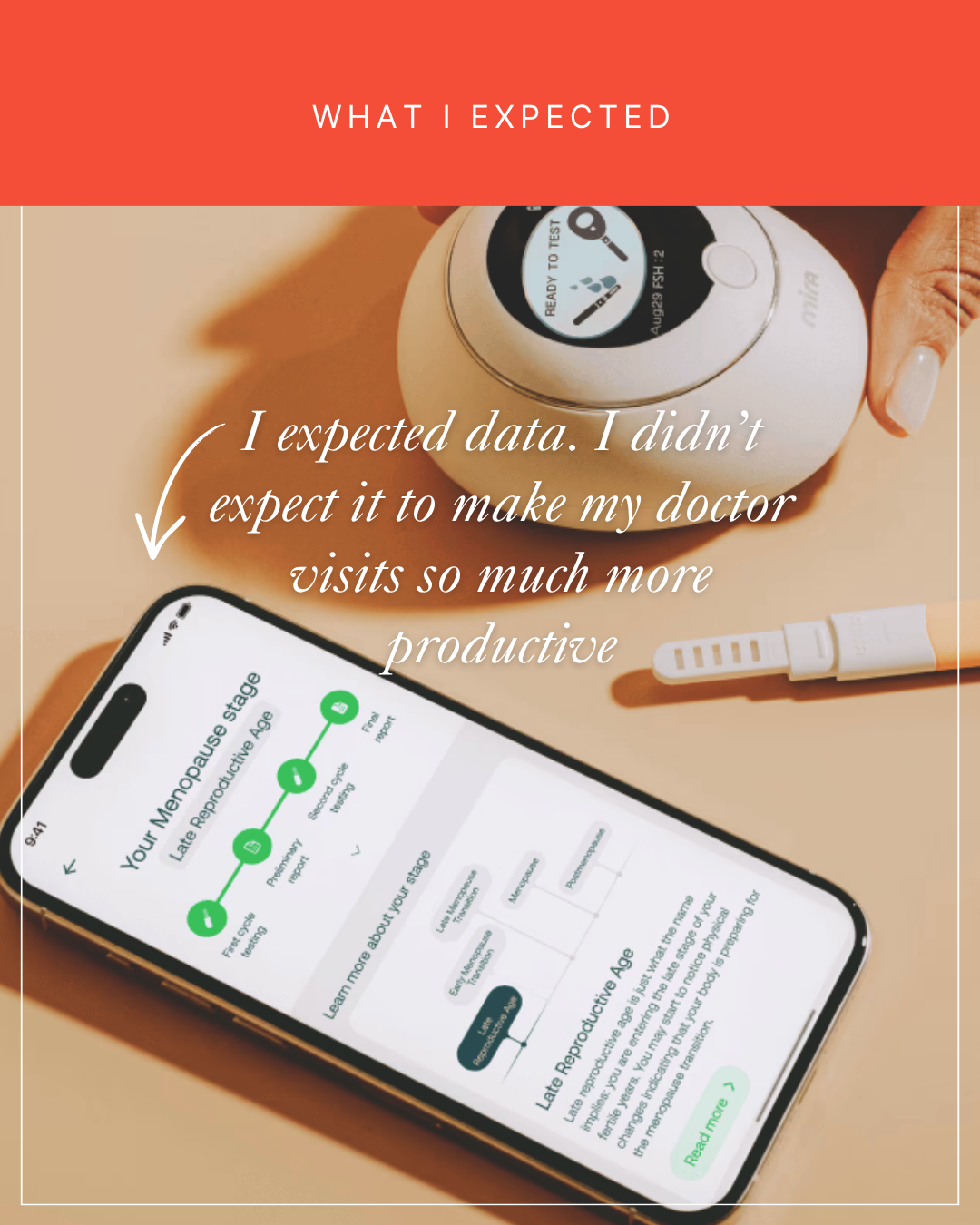
Mira doesn’t diagnose. You are capturing data that you can take to your doctor: urine hormone levels from the Analyzer and self-recorded symptoms for the same time period. Mira can generate a Doctor’s Report after at least three months of testing. The PDF report can include hormone data, cycle information, and logged symptoms.
I expected hormone data. I didn’t expect my doctor’s visits to become so much more productive.
I've used Mira for about a year and have had only one or two reading errors. The process is pretty straightforward:
Collect your urine. Dip the wand for 10 seconds. Transfer the cap on the dip to the collection side. Insert the other side into the Analyzer. Wait about 22 minutes. Keep your phone near the unit, and results will upload automatically.
Once you've done it a couple of times, there really isn't much of a learning curve. If you're going to ask me to conduct a small science experiment with my first morning urine before I've had coffee, it needs to be easy. This is.
Mira doesn't replace my doctor, and it doesn't replace medically indicated lab work.
It serves a different purpose for me. I have brain fog from perimenopause. I can’t be expected to recall which day of my mostly irregular cycle I had a headache.
Here is the part I like less. As of September 2026, 20 Ultra4 wands cost $99, or 30 for $139.
Depending on how often you're testing, that adds up. And unlike buying the Analyzer once, the wands are an ongoing expense. But I also put that $100 into context.
I've easily spent that much on copays, repeat appointments, and lab tests while trying to solve hormone issues—and still walked away feeling like we didn't have enough information. That doesn't mean I can spend $100 on Mira and skip the doctor. Quite the opposite.
For me, Mira helps me get more out of the doctor's appointment I'm already having. That makes the cost easier for me to justify.
I don't think every woman in perimenopause needs this. Mira makes the most sense if your symptoms feel unpredictable, you like data, and you want a better record to bring to your doctor.
If seeing every fluctuation is going to make you anxious, skip it. My doctor's rule was basically: if the data makes you neurotic, stop using it. (I’m already neurotic.)
Mira says it plans to add a cortisol test next. When that happens, I will obviously be testing whether my husband is, in fact, the source of all my stress. For scientific purposes.
I considered an EXCEED because Mira made my doctor visits more productive than I expected. But it did not make my hormone problems disappear. So we're staying with MEET.
Not sponsored. Not gifted. This review is based on my own personal experience.
This post may contain affiliate links. If you buy through these links, I may earn a commission at no extra cost to you.